What Is Fiber Internet and Is It Available at Your Address?
Fiber internet uses thin strands of glass or plastic to transmit data as pulses of light, making it significantly faster and more reliable than traditional cable or DSL connections. Fiber offers symmetrical upload and download speeds, meaning your connection is just as strong when you are sending data as when you are receiving it. Availability varies by address, not just by zip code or city. EasyConnect checks what is actually available at your exact home so you can find out in minutes whether fiber is an option where you live.
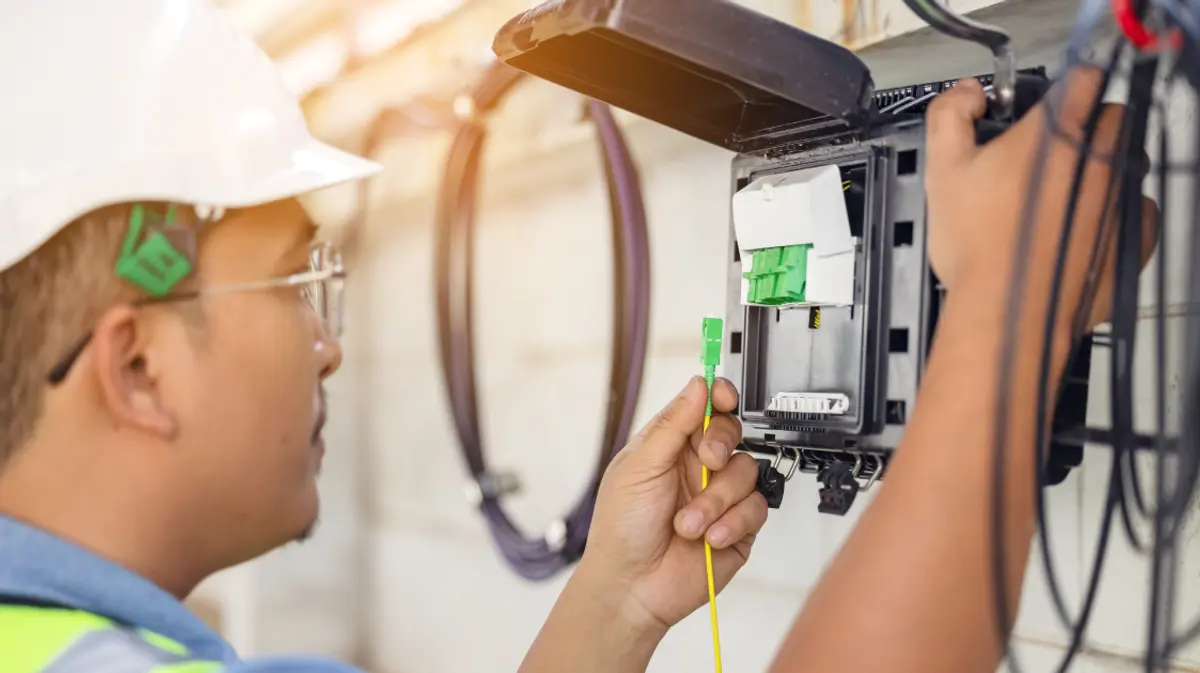
A Different Kind of Connection
Most homes in the United States have been connected to the internet the same way for decades, through copper wire infrastructure originally built for telephone lines or coaxial cable designed for television. These technologies have been adapted to carry internet traffic, and they work, but they have real limitations in terms of speed, consistency, and the volume of data they can handle.
Fiber internet is built differently from the ground up. Instead of copper or coaxial cable, fiber uses thin strands of glass or plastic, each roughly the diameter of a human hair, to carry data as pulses of light. Light travels faster and degrades less over distance than electrical signals through copper, which is what makes fiber capable of speeds and reliability that older infrastructure simply cannot match.
How Fiber Internet Actually Works
The principle behind fiber is straightforward. Data is converted into light signals and sent through the fiber optic cable at close to the speed of light. At your home, a device called an Optical Network Terminal converts those light signals back into the electrical signals your router and devices can use.
Because light does not experience the same interference or signal degradation as electrical current, fiber maintains consistent performance over longer distances and is far less susceptible to the kinds of slowdowns that affect cable and DSL connections during peak usage hours. When your neighbors are all streaming at the same time on a Friday evening, a fiber connection holds steady in a way that cable connections often do not.
Fiber vs. Cable vs. DSL: What Is the Difference
Understanding where fiber fits means knowing what it is being compared to.
DSL runs over standard telephone lines and is the slowest of the three for most households. It is widely available in areas where other infrastructure has not been built out, but speeds are limited and performance degrades significantly the further your home is from your provider's equipment.
Cable uses the same coaxial infrastructure as your television service. It is faster than DSL and widely available in suburban and urban areas. The key limitation is that cable connections are asymmetrical, meaning download speeds are much faster than upload speeds. Cable networks are also shared among households in a given area, which can lead to slowdowns during peak usage times.
Fiber offers the strongest performance of the three. Speeds are faster, consistency is higher, and crucially, most fiber plans offer symmetrical upload and download speeds. For households where multiple people are working, streaming, gaming, or running smart home devices simultaneously, fiber handles the demand with considerably more headroom.
Why Symmetrical Speeds Matter
Most people focus on download speed when comparing internet plans, and that makes sense for basic streaming and browsing. But upload speed has become increasingly important for how people actually use the internet at home.
Video calls send your audio and video outward, which is an upload task. Sharing large files with colleagues, backing up photos and documents to the cloud, running a home security system with multiple cameras, and gaming online all rely heavily on upload speed. Cable and DSL plans typically offer upload speeds that are a fraction of their download speeds, which is fine for light use but becomes a real constraint for busy households and remote workers.
Fiber's symmetrical speeds mean you get the same performance in both directions. A 1 Gig fiber plan delivers 1 Gig up and 1 Gig down. That consistency makes a meaningful difference in day-to-day connected life.
Is Fiber Internet Available at Your Address
This is the question that matters most, and the honest answer is that it depends entirely on your specific address, not your city, not your zip code, and not what your neighbor has.
Fiber infrastructure has expanded significantly over the past decade, but it is not uniformly available everywhere. Availability can vary street by street and even building by building within the same neighborhood. A newly developed subdivision may have fiber running to every home. An established neighborhood nearby may have no fiber options at all, depending on when infrastructure was laid and which providers have invested in that area.
Factors that influence availability include how recently your area was developed, whether your local provider has invested in fiber expansion, and whether you live in a high-density urban area, a suburban neighborhood, or a more rural location. New construction homes in areas with recent development often have fiber infrastructure already in place.
The only reliable way to know whether fiber is available at your home is to check at the address level, not the zip code level. This distinction matters because zip codes cover large and varied geographic areas where infrastructure can differ significantly from one block to the next.
How to Find Out If Fiber Is Available Where You Live
EasyConnect checks availability at your exact address and shows you every plan from every provider that genuinely serves your home, including fiber options where they exist, from 26-plus trusted providers. You enter your address once and see your real options, rather than spending time on multiple provider websites only to find out after the fact that a plan is not available where you live.
If fiber is available at your address, EasyConnect will show you the fiber plans you can actually sign up for. If it is not yet available, you will see the strongest alternatives that do serve your home so you can make the right choice with complete information.
BBB Accredited with an A rating, EasyConnect makes the process of finding and connecting to the right internet plan straightforward and fast, regardless of which connection type is available in your area.
Find My Plan at easyconnect.co
Frequently Asked Questions
What is the difference between fiber and regular internet?
Regular home internet most commonly runs over cable or DSL infrastructure, which uses copper-based wiring. Fiber uses glass or plastic strands to carry data as light signals, which allows for faster speeds, more consistent performance, and symmetrical upload and download speeds. For households with heavy internet use, the difference in day-to-day reliability is noticeable.
How do I know if fiber internet is available at my address?
The most reliable way is to check at the address level rather than searching by zip code or city. Fiber availability varies significantly even within the same neighborhood, depending on the infrastructure that has been built to your specific location. EasyConnect checks availability at your exact address and shows you every plan, including fiber, that is genuinely available where you live.
Is fiber internet faster than cable?
Yes, in most cases. Fiber supports faster maximum speeds and, importantly, offers symmetrical upload and download speeds where cable does not. Fiber also tends to maintain more consistent performance during peak usage hours because it does not experience the same network congestion that shared cable infrastructure can.
Do I need special equipment for fiber internet?
Fiber requires an Optical Network Terminal, a small device that converts the fiber optic signal into a usable connection for your home network. Most providers include this as part of installation. Beyond that, you use a standard router and connect your devices the same way you would with any other internet connection.
Why is fiber not available everywhere?
Fiber requires physical infrastructure to be built to each location. While fiber deployment has expanded considerably in recent years, it remains concentrated in areas where providers have made the investment to lay new cabling. Urban and newer suburban developments tend to have stronger fiber availability, while older neighborhoods and rural areas may have limited or no fiber options currently. Availability continues to expand as providers invest in network upgrades.